Most families do not build a caregiving schedule. A schedule happens to them: whoever lives closest starts covering the gaps, that becomes the default, and eighteen months later one adult child is doing roughly ninety percent of the work while everyone genuinely believes it is shared.
A written rota is not a bureaucratic exercise. It is the only mechanism that makes the real distribution visible, and visibility is what stops the slow, silent collapse onto one person.
How to build a caregiver rotation that holds
- Count the actual hours first, before anyone volunteers for anything
- Split presence from admin — insurance, bills and scheduling are real work, done from anywhere
- Assign whole blocks to named people, not fragments to 'whoever can'
- Give every block a named backup, so the primary is allowed to get sick
- Rotate the hard slots — nobody owns every Sunday permanently
- Put a review date in the calendar before the rota starts
The rota's job is not fairness in the abstract. It is making the actual load visible to everyone, including the person carrying it.
Step one: count the hours before you divide them
Almost every family that tries to split caregiving starts by dividing days, and almost every one undercounts the work by half — because the visible part is the sitting-with-her part, and the invisible part is the pharmacy, the insurance appeal, the aide who cancelled, the fall mat that needs ordering, and the forty minutes on hold with the neurology scheduler.
Spend one week logging everything, including the invisible tasks. Then divide. The National Institute on Aging's guidance on sharing caregiving responsibilities makes the same point: the conversation goes better when it starts from a written list rather than from impressions.
Step two: separate presence from administration
This is the most useful distinction in the whole exercise, and it is what makes it possible for a sibling in another state to genuinely carry a third of the load.
| Presence work | Administrative work |
|---|---|
| Evening and weekend cover | Insurance claims and appeals |
| Medical appointments (in person) | Scheduling and confirming appointments |
| Personal care and meals | Bills, banking, benefits paperwork |
| Supervising and briefing aides | Ordering supplies and equipment |
| Overnight cover | Researching services, maintaining the medical list |
Administrative work is unglamorous, genuinely time-consuming, and completely location-independent. Handing the entire right-hand column to a distant sibling is often the single biggest reduction in the local caregiver's load — and it is the practical core of keeping long-distance siblings genuinely involved.
What a working rota looks like
Three design choices in that grid matter more than the specific names:
- Whole blocks, one owner. "Dana has Saturdays in weeks 1 and 3" is a commitment. "We'll all pitch in on weekends" is a wish.
- The hard slots rotate. Nobody owns every Sunday forever. Permanent assignment of the worst slot is how resentment starts.
- On-call is a named role, and it is never the person already on duty. Without this, the primary caregiver can never be ill, and eventually they will be.
Free sibling rotation planner
A four-week rotation grid with separate sections for presence work, administrative work and on-call backup, plus an hours-audit worksheet to fill in first.
- Printable four-week grid and a blank hours audit
- A duty-split worksheet — see how to divide caregiving duties
- A review-meeting agenda for the four-week check-in
The rules that keep a rota alive
Swaps go through the calendar, not through texts
Every family agrees to swap shifts. The failure is agreeing in a text thread that nobody updates the schedule from. If a swap is not written into the shared rota, it did not happen — and the person who shows up expecting cover is the one who pays.
The review date is not optional
Set it before you start, four weeks out. A rota that has never been reviewed is not a rota, it is a new default — and defaults are exactly what you were trying to escape. Care needs also change; the schedule that worked in March may be wrong by August.
Build in one genuinely free weekend per sibling per month
Not "call if you need me" free. Actually off, with someone else named. The Alzheimer's Association is direct about the health consequences of unrelieved caregiving, and a rota that assumes infinite availability will produce exactly one burned-out person and several guilty ones. If nobody can cover, that is what respite care is for.
If one sibling is doing far more, name it in the rota rather than leaving it implicit. Some families formalise this — a set monthly amount from siblings toward the primary caregiver's costs, or explicit acknowledgment in a parent's planning documents. Awkward once beats resentful for years.
Keeping the schedule and the record in one place
A shared calendar tells everyone who is on duty. It does not tell the person arriving what happened during the shift before theirs — that is what the handoff note is for, and keeping the two separate is how information gets lost between them.
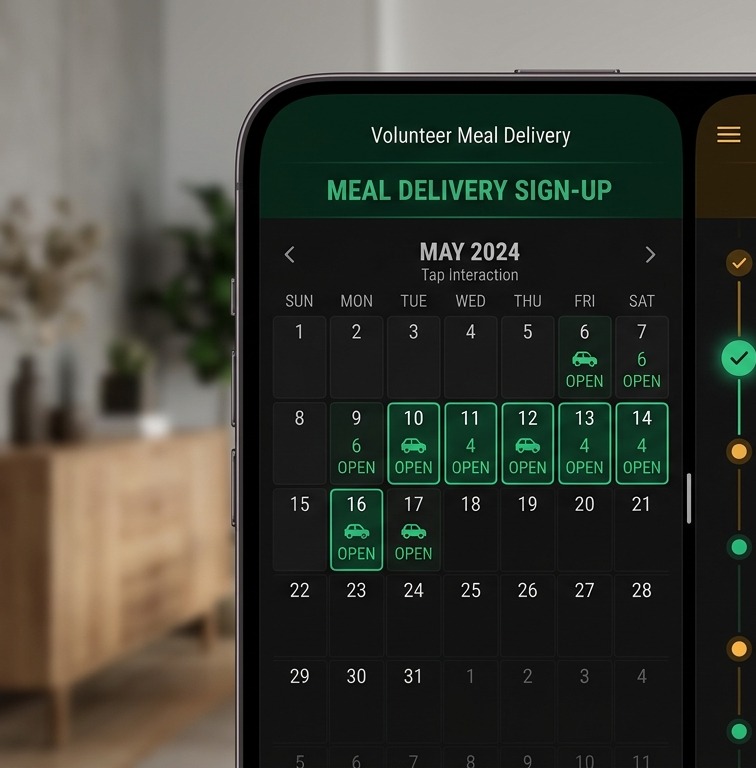
Care Dementia Tracker holds the rota and the record together: the routine timeline shows who is assigned to what and when, tasks are marked complete by a named person as they happen, and every caregiver on the team — up to five, including paid aides — sees the same view in real time. The sibling who has this weekend can see how the last three days actually went before they walk in.
Common ways rotas fail
- Dividing by days instead of by responsibility. "Tuesdays and Thursdays" leaves the insurance appeal permanently unowned. Assign the invisible work by name too.
- Building it around who is available rather than what is needed. Start from the hours audit, then fit people to it. Otherwise you build a schedule that covers the convenient hours and leaves the hard ones to whoever lives closest.
- No written record of what was agreed. Six weeks later, three siblings remember three different agreements — all honestly.
Common questions
How do you split caregiving when one sibling lives much closer?
Give the distant sibling the entire administrative column — insurance, scheduling, bills, supplies, research. It is genuinely time-consuming, completely location-independent, and usually the largest single reduction in the local caregiver's load.
What if a sibling refuses to participate at all?
Stop negotiating for equal presence and ask for one specific, bounded task instead. A concrete request like owning the pharmacy refills is accepted far more often than an open-ended request to help more.
How often should the rotation be reviewed?
Every four to six weeks at first, then quarterly once it stabilises. Care needs change, and a rota nobody has reviewed quietly becomes the permanent default.
Should the primary caregiver be paid by the other siblings?
Many families do arrange a contribution, either toward costs or as a formal caregiver agreement. It is worth raising early and worth writing down, and an elder law attorney can advise on how it interacts with benefits eligibility.
What is the on-call role for?
A named second person for each block, so the caregiver on duty is allowed to be ill or delayed. Without a named backup, the primary caregiver effectively never gets a day off.
Sources
This is a documentation and coordination guide, not medical advice. It will not tell you what a symptom means or how to treat it. Any sudden change in behavior, alertness, appetite, or continence should be reported to your care recipient's doctor or nurse line the same day — sudden changes in someone with dementia can signal an infection or other treatable medical problem.