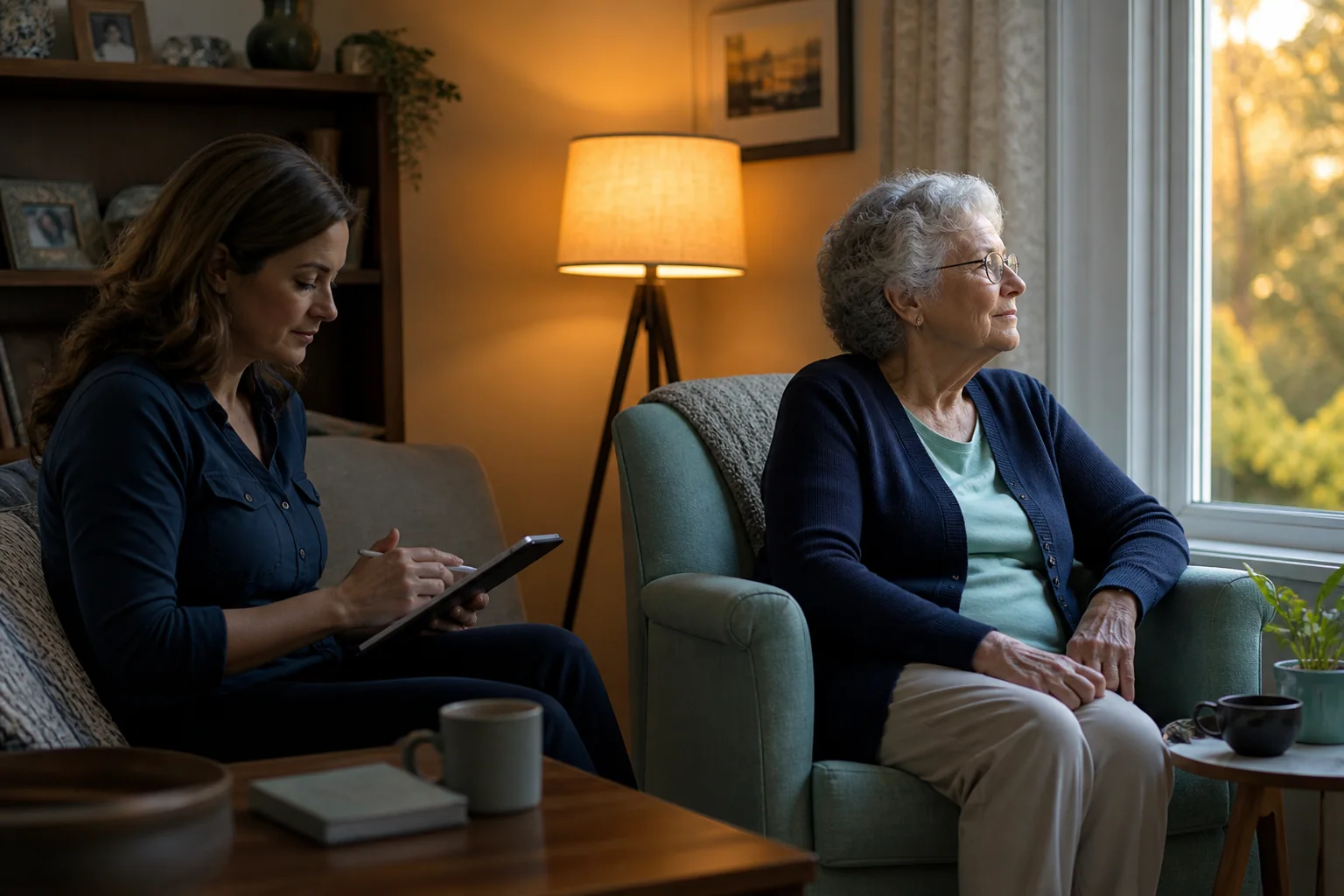
A behavior log should not judge the person or try to diagnose a cause. Its job is to preserve details that are easy to forget: when the change began, what was happening around the person, how long it lasted, and what response seemed to help or make things worse.
What the National Institute on Aging saysPain, depression, stress, and sudden changes in a familiar place, routine, or person can contribute to agitation or aggression.NIA recommends looking for physical causes with a doctor and calling 911 during an emergency while explaining that the person has dementia.
Source: nia.nih.gov/health/alzheimers-changes-behavior-and-communication/coping-agitation-aggression-and-sundowning →Record what you can observe
Use concrete language. “Walked between the kitchen and front door for 15 minutes and repeatedly asked to go home” is more useful than “was acting strange.” Record the time, duration, location, who was present, and the intensity or safety risk.
Capture what happened immediately before
Possible context might include a loud television, a crowded room, a change in caregiver, a disrupted routine, a difficult personal-care task, hunger, thirst, fatigue, or an unfamiliar place. This does not prove that the context caused the behavior; it simply gives the care team something specific to compare across events.
Write down the response and outcome
Note what the caregiver tried and what happened next. Examples include reducing noise, offering a snack, taking a short walk, changing the subject, moving to a familiar room, or allowing more time to respond. The National Institute on Aging advises patience, a calm tone, and approaches such as distraction when a person becomes upset.
Include relevant routine and health changes
Sleep disruption, poor intake, constipation, signs of pain, a recent medication change, fever, or a sudden change in mobility can be important context. A sudden or severe behavior change can have a medical cause and should be discussed promptly with a qualified health professional. Immediate danger requires emergency help.
A simple behavior-log format
- When and where: date, time, location, and duration
- What was observed: exact actions, words, mood, and intensity
- What happened before: activity, environment, people, routine, food, sleep, or care task
- What the caregiver tried: communication, environment change, redirection, rest, food, or another response
- What happened after: improved, continued, escalated, or changed
- Safety or medical concern: fall, injury, sudden change, possible pain, or urgent risk
- Who was notified: family member, nurse, physician, pharmacist, or emergency service
Review patterns with the right people
One event may not reveal much. Several consistent notes can help caregivers prepare for difficult times of day and give clinicians clearer information. Share relevant patterns during appointments, while protecting the person’s privacy and dignity.
Turn observations into a shared care record.
Log behavior, intensity, possible triggers, and helpful responses for the entire care team.
Download on Google PlayThis article is general educational information and is not medical advice. Contact a qualified health professional about sudden, severe, or concerning changes.