How to Write a Dementia Appointment Recap for Family
A dementia appointment recap for family should capture what was agreed, who handles each next step, and when it needs to happen. Keep it short enough that the person who missed the appointment can read it before their next visit. Write it with the person's preferences and consent in mind. Share only what each recipient needs to help, and confirm details you aren't sure you heard correctly with the care team or the written visit summary.
What belongs in a recap after the appointment?
Start with the date and the reason for the visit in a sentence. Then separate the clinician's instructions, tasks the family has offered to take on, and questions that remain open. A note that says “call about follow-up” makes everyone wonder who is calling. “Jordan will call the office by Thursday to confirm the follow-up time” gives the job to one person and provides a point to check.
You can add a brief observation if it helps the next caregiver understand the day. Describe what happened and when, and include the person's own words if they want them shared. If a family member noticed something and raised it during the visit, label it as an observation. Reserve wording such as “the clinic recommended” for instructions you can verify. This distinction becomes useful a week later, when it's harder to remember which ideas were confirmed.
A short example you can copy
“Monday, November 23: Routine follow-up. The office said it would send the visit summary. Jordan will check the portal on Wednesday and call the office if it hasn't appeared. Riley will confirm transport once the next appointment is on the calendar. We're still waiting to hear whether a separate form is needed. Please add questions to the family list so Jordan can take them in one call.”
This note records commitments and unanswered questions without sending a whole document into a group chat. A prepared care team can then look at the original instructions when details are needed. If the official summary differs from your notes, update the recap and note the correction rather than letting two versions circulate.
Make the recap useful to the next caregiver
Consider what a reader will do after opening it. A sibling arranging transport needs a date, a pickup plan, and a way to get hold of the driver. A caregiver attending the following appointment might need the family's list of open questions and access to the original summary if appropriate. A relative who simply wants to know how the appointment went may only need a short update. You can keep the full recap in one agreed place and send a shorter message where that fits.
A recap is also a natural handoff. Put time-sensitive actions first, even if they came up last in the discussion. Leave routine background and any detailed history farther down. If several people can see the shared note, ask the person who takes an action to record that it was completed. “Scheduled for December 8, ride confirmed” is more helpful than an old checkbox that still reads “call to arrange.”
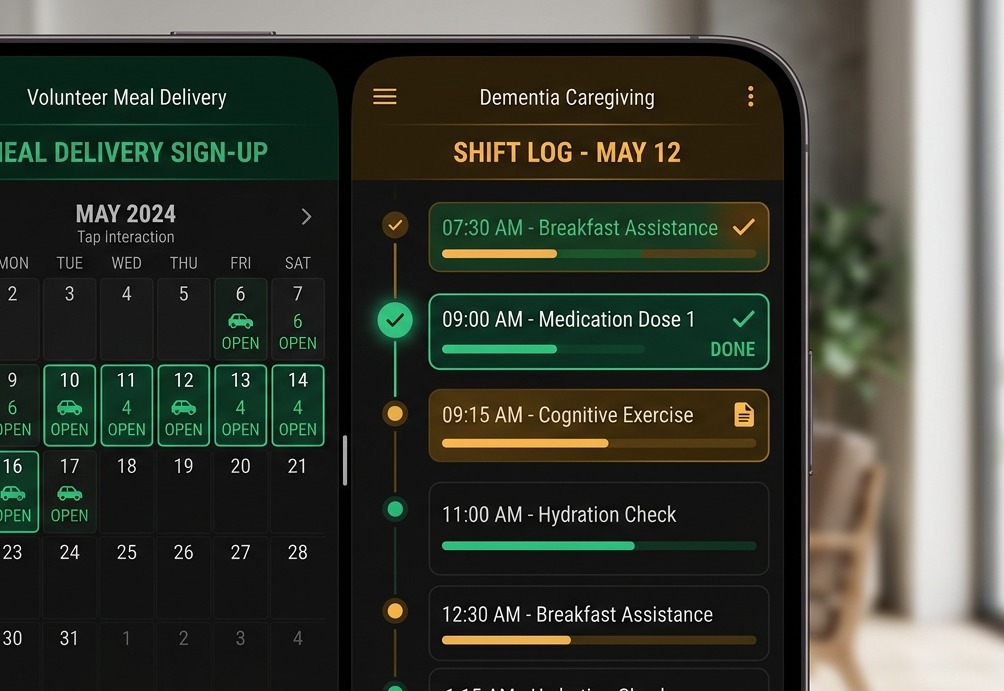
For an everyday version of this workflow, see the site's caregiver shift handoff guide. When family members are covering different days, the shared caregiving schedule guide can help you decide who should own appointments, transport, and follow-up. The Alzheimer's Association guide to working with the doctor offers another reference for planning conversations with the care team.
Where should a family keep appointment recaps?
Pick a place the relevant caregivers already use and can access. A paper binder may work for people who take turns in the same home. Family members in different locations may prefer a shared log. Give every recap a recognizable title with the visit date and keep the current action list easy to find. Use neutral descriptions and review who has access as the care team changes. A relative leaving the rotation may no longer need ongoing updates.
Start with the next visit
Before leaving, agree on one person to write the recap and another to cover open tasks if needed. Then send a short note as soon as the details are settled. If your family wants one place for routine notes and caregiver handoffs, explore Care Dementia Tracker's shared care features. Bring one recent visit into the workflow first and ask the next caregiver if they can find the next action in under a minute.