Dementia Care App vs. a Shared Notebook
Published by Care Dementia Tracker Team • 12 min read (1,800+ words)
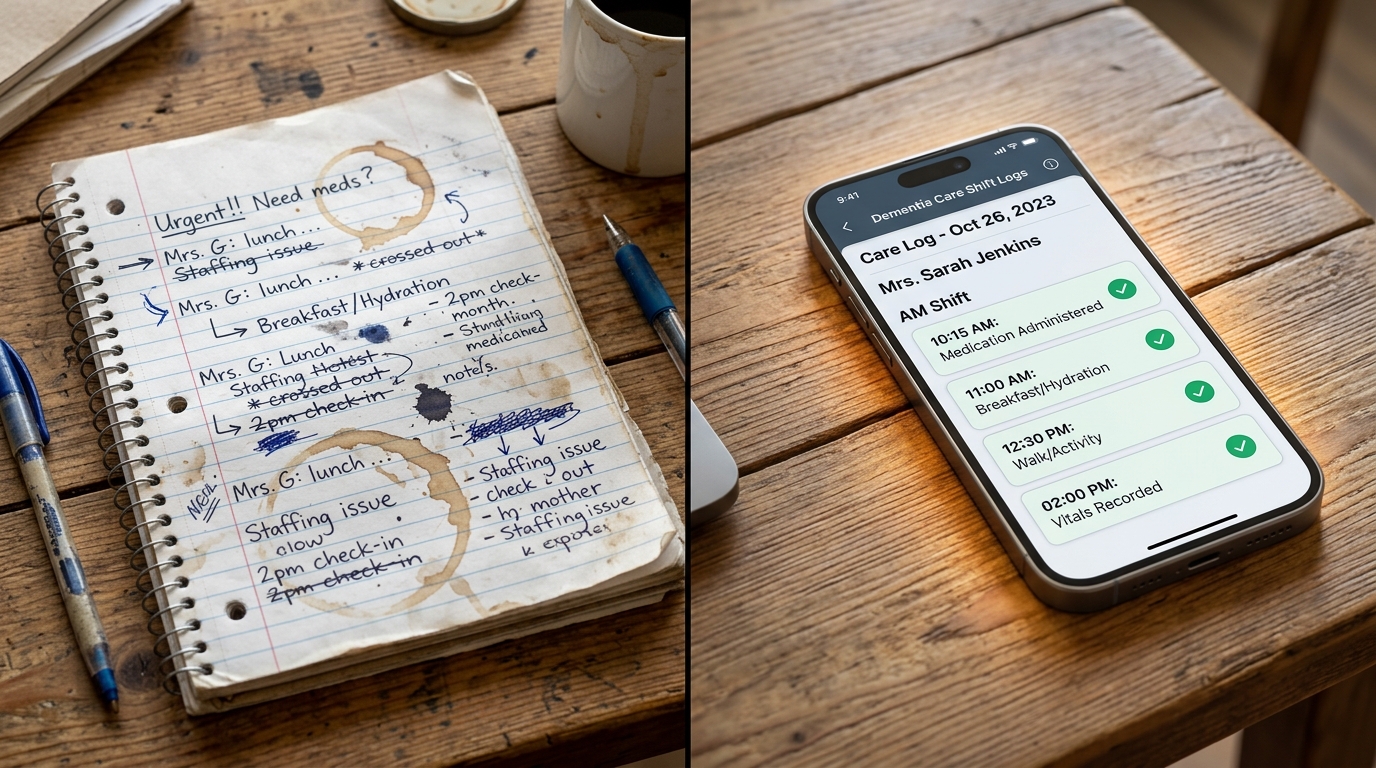
Where Paper Notebooks Excel
Paper requires zero charging, works during power outages, and has zero learning curve for older family members who dislike smartphones.
Where Paper Notebooks Break Down for Dementia
- warning Out-of-Town Siblings Can't Read It: A brother 500 miles away can't look at a notebook sitting in mom's kitchen.
- warning No Medication Lock Alarms: Paper won't buzz your phone if someone forgets the 6:00 PM pill or accidentally takes it twice.
- warning Doctor Summaries Take Hours to Write: Flipping through 3 months of handwritten pages before a neurologist visit is stressful.
Where a Paper Notebook Beats a Mobile App
A physical paper notebook never loses battery power, requires no password logins, and feels warm and tactile. If only one caregiver lives with mom 24/7 and no external family or paid aides are involved, a simple paper spiral notebook is completely fine.
Practical Daily Care Strategies for Family Caregivers
Providing daily care for an aging parent with memory loss or progressive dementia requires practical, repeatable routines. When multiple helpers share caregiving responsibilities, following proven communication standards prevents misunderstandings and keeps everyone aligned.
1. Consistent Daily Schedules
People with memory loss thrive on predictability. Keeping wake-up times, meals, afternoon walks, and medication times consistent reduces anxiety and helps prevent late afternoon sundowning restlessness. Explore our guide on coordinating care schedules.
2. Medication Locking & Safety
Never rely on memory or verbal confirmations for prescription doses. Using a real-time mobile app with instant medication locks ensures no family member or aide accidentally gives duplicate pills. Learn how to prevent double dosing here.
3. Structured Shift Handoffs
Whenever a family member leaves and another arrives, exchange a quick 60-second summary of meals eaten, mood observations, and upcoming tasks. Read our shift handoff notes guide and shift handoff app overview.
4. 1-Page Summaries for Neurologists
Convert daily tracking into clean 1-page paper summaries for your neurologist visits. Doctors can quickly evaluate 30-day medication compliance and symptom progression. Check out our doctor report template.
For additional clinical resources, consult the National Institute on Aging (NIH) and the Alzheimer's Association Caregiving Hub.
Frequently Asked Questions
Why do families replace paper care notebooks with an app?
Paper notebooks can only be in one place at a time. If an out-of-town sibling or evening aide needs to verify a medication dose, a digital app provides instant remote access on everyone's phone.
Upgrade from Paper Free Today
Download Care Dementia Tracker on Android to share live notes and medication locks with your family.